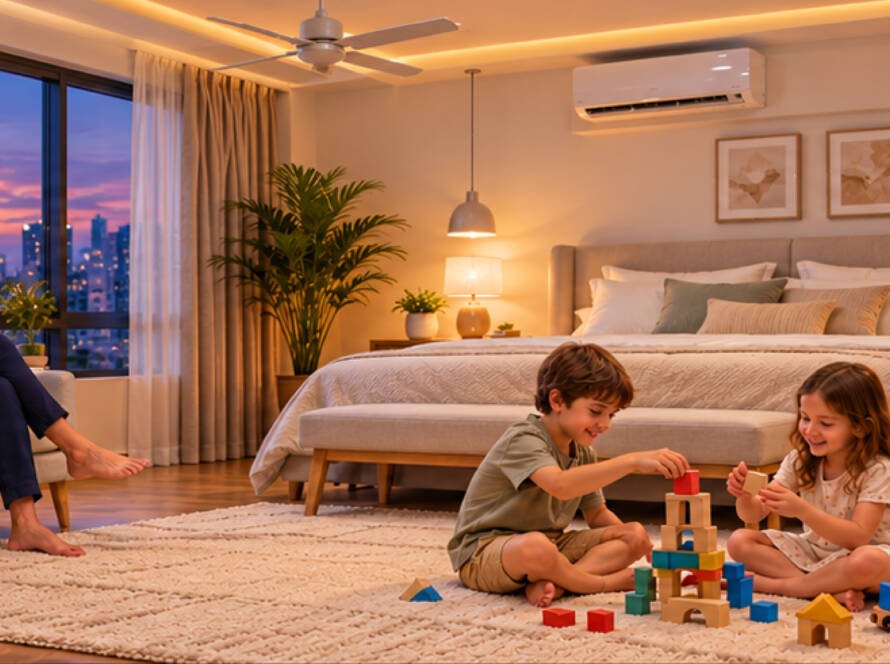


From breakfast at the dining table to a quiet evening on the sofa, discover how human-centric lighting can help you plan light around everyday life.
Your dining table does a lot more than serve dinner.
In the morning, it holds breakfast plates, a cup of tea and someone’s missing schoolbook. A few hours later, it becomes your workspace. By evening, the laptop has made way for dinner, and the conversation has moved beyond deadlines.
The same room supports several different parts of your life.
Yet you may be using the same lighting setting through all of them.
Perhaps the ceiling lights feel comfortable while you are working, but too bright when you sit down to relax. Perhaps your favourite corner looks inviting after sunset, but needs more light when you read there on a cloudy afternoon
The room hasn’t changed. What you need from it has.
That is a useful place to begin a conversation about human-centric lighting.
Good Lighting Starts With the Life in the Room
Human-centric lighting starts with the people who use a space: what they are doing, when they are doing it and what makes the surroundings comfortable.
At home, that means thinking beyond whether a light is simply on or off.
Can you read comfortably at the table? Is a ceiling light reflected in your laptop screen? Does the living room still feel like a workspace when you want to settle in for the evening?
There is also a biological reason to consider timing. Light helps synchronise the body’s internal daily clock. Its effects depend on factors including the light reaching your eyes, its intensity and spectrum, and when and how long you experience it. Thoughtful lighting design considers these factors alongside visibility, comfort and glare.
For your home, the practical starting point is simple: plan the light around the way you use the room throughout the day.
One Room. Four Different Moments.
Imagine how that dining and living area might support an ordinary day.
8:00 a.m. | Breakfast and the Day Ahead
The curtains are open. Someone is pouring tea while you check the day’s plans.
On a bright morning, daylight may already provide much of the light you need. On a darker morning, you may want more illumination over the table and kitchen counter.
A useful morning setting begins with the activity: seeing your breakfast, finding what you need and getting ready comfortably.
11:00 a.m. | The Dining Table Becomes a Desk
Your laptop is open, a notebook sits beside it and the room has taken on a different job.
You may prefer a brighter setting than you would choose for dinner. You also want light on your notes without an overhead reflection getting in the way of your screen.
The position of the light matters here. So do the window, your chair and the direction you face.
Turning up the brightness is one adjustment. Making sure the light falls where you need it is another.
7:30 p.m. | Dinner Deserves a Different Setting
The laptop closes. Plates replace paperwork. There is finally time to catch up.
You might now prefer softer main lighting, warmer-looking white light and more emphasis on the pendant above the table.
It is the same room, but you want a different atmosphere from the one that accompanied your afternoon meeting.
Your lighting plan can make space for that change.
10:00 p.m. | One Last Cup of Tea
The table is clear. You move to the sofa, and the evening slows down.
Perhaps you only need a lamp beside your chair, gentle background lighting and enough illumination to move around comfortably.
The room is being used in a smaller, quieter way. Your lighting can reflect that.
These times illustrate one household’s day. Your working hours, preferences and evening routine may be different.
One room can hold many moments. Its lighting can be planned for each of them.
48 Points. One Lighting Plan for Your Day.
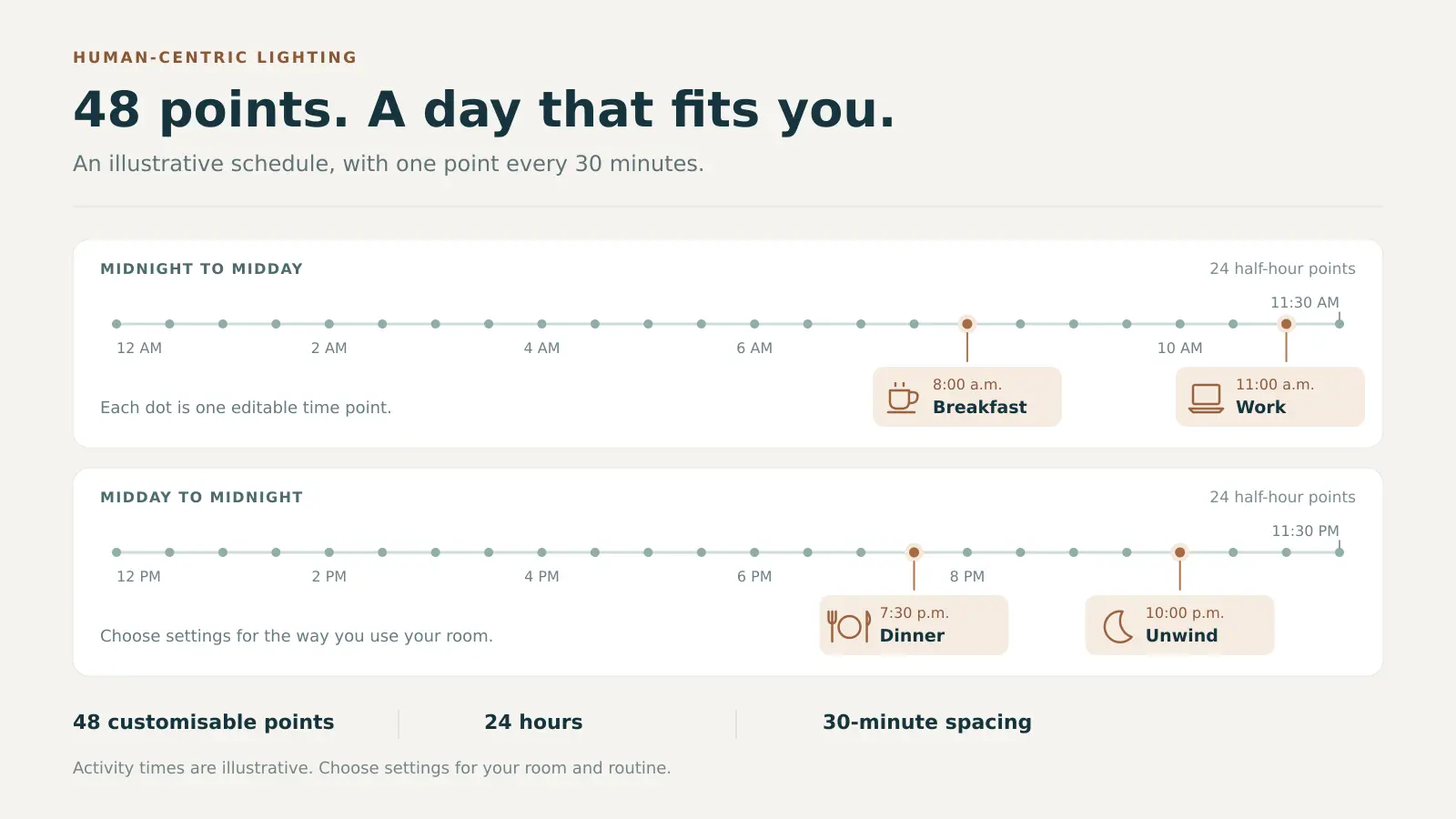
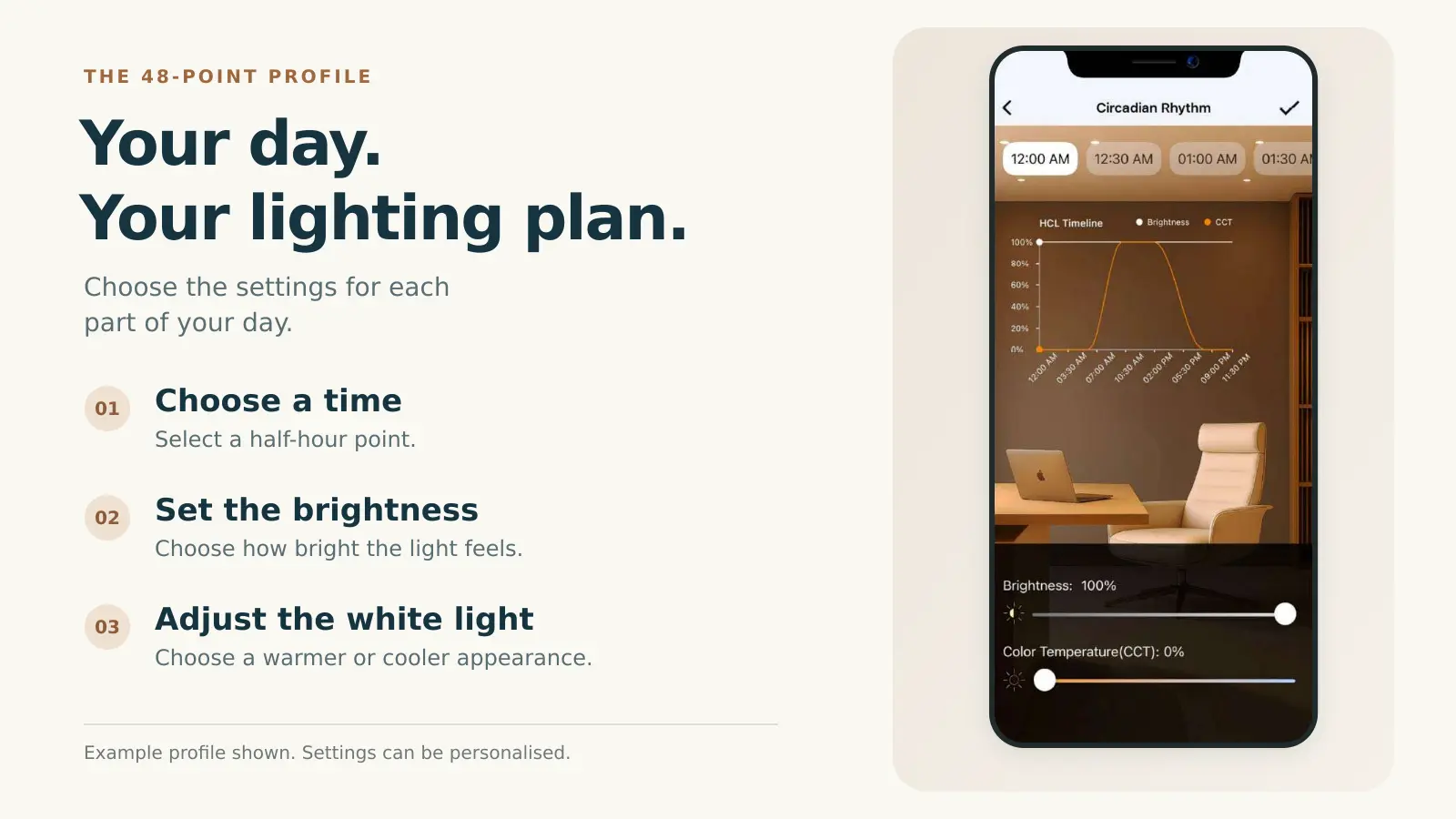
With compatible lighting, Plexilent’s human-centric lighting feature provides 48 customisable points across 24 hours for planning brightness and the warm-to-cool appearance of white light. That gives you a setting point every half hour.
Think of it as a lighting timetable built around your routine.
You can plan the settings you prefer around breakfast, during the hours a room serves as a workspace and later in the evening.
At each point, consider two things:
- Brightness:How much light do you want for that part of your day?
- White-light appearance:Would you prefer a warmer or cooler-looking setting?
Several points can share the same settings. The value is having the flexibility to place changes where they make sense for you.
Start with the main moments in your routine, then build the rest of the profile around them.
Behind the Comfort: A Note for Lighting Professionals
For designers, specifiers and system integrators who want the technical detail.
A daily profile defines how lighting is controlled over time. The experience it delivers also depends on the luminaires, drivers, room layout, daylight and light reaching the occupants.
| Consideration | What to assess |
|---|---|
| Control compatibility | Confirm that the selected controls, drivers and luminaires support the required dimming and tunable-white functions. |
| Correlated colour temperature, or CCT | CCT describes the warm-to-cool appearance of white light in kelvin. Check the supported range and how the installed lighting responds to the control settings. |
| Melanopic equivalent daylight illuminance, or melanopic EDI | This metric describes the light stimulus weighted for melanopsin sensitivity. Assessment considers the spectrum and intensity of light at the occupant’s eye position. |
| Commissioning | Verify task visibility, glare, viewing positions and the intended interaction between daily profiles, sensors and manual controls. |
A CCT value alone does not establish a particular biological effect. The spectrum, light level at the eye and exposure timing also matter. These considerations sit alongside the visual requirements of the space.
For projects referencing WELL v2 L03, performance verification includes measurements of circadian lighting. DIN/TS 67600 provides complementary design criteria concerning non-visual effects of light. Assess the complete installation against the applicable project requirements; scheduling capability alone does not demonstrate compliance.
Make Room for Cloudy Days and Late Dinners
A daily routine is a useful starting point. Real life still brings changes.
Clouds arrive halfway through the afternoon. Dinner runs late. Friends come over just as you would normally start winding down. The living room becomes the setting for a board game that needs more light than your usual evening plan.
These are useful situations to discuss when setting up your lighting.
If you want the lights to respond to available daylight or whether a room is occupied, discuss suitable sensors and configuration with your installer.
Also agree on what should happen when you choose a different setting yourself. How long should that choice remain active? When should the daily profile resume?
Plan the schedule, sensor responses and manual controls together.
A setup is easier to live with when you understand how it behaves on both ordinary days and the ones that go differently.
Start With the Room You Know Best
You can begin by looking closely at one room you use every day.
Notice the moments when you reach for a switch, dim a light, move a lamp or wish the room felt different.
Four questions can help:
- What happens here? Think about working, reading, eating, watching television and spending time together.
- When does the lighting feel wrong? Perhaps it is too bright during dinner, too dim for reading or reflected in a screen.
- What does daylight already provide? Notice how the room changes between morning and afternoon.
- Which adjustments do you keep making? Repeatedly dimming the same light or switching on the same lamp can reveal a useful starting point.
Turn those observations into a few clear preferences.
More light where you read. A comfortable setting for work. A softer atmosphere around the table. A quieter corner later in the evening.
Then refine the profile through everyday use.
Let the Evening Feel Like Evening
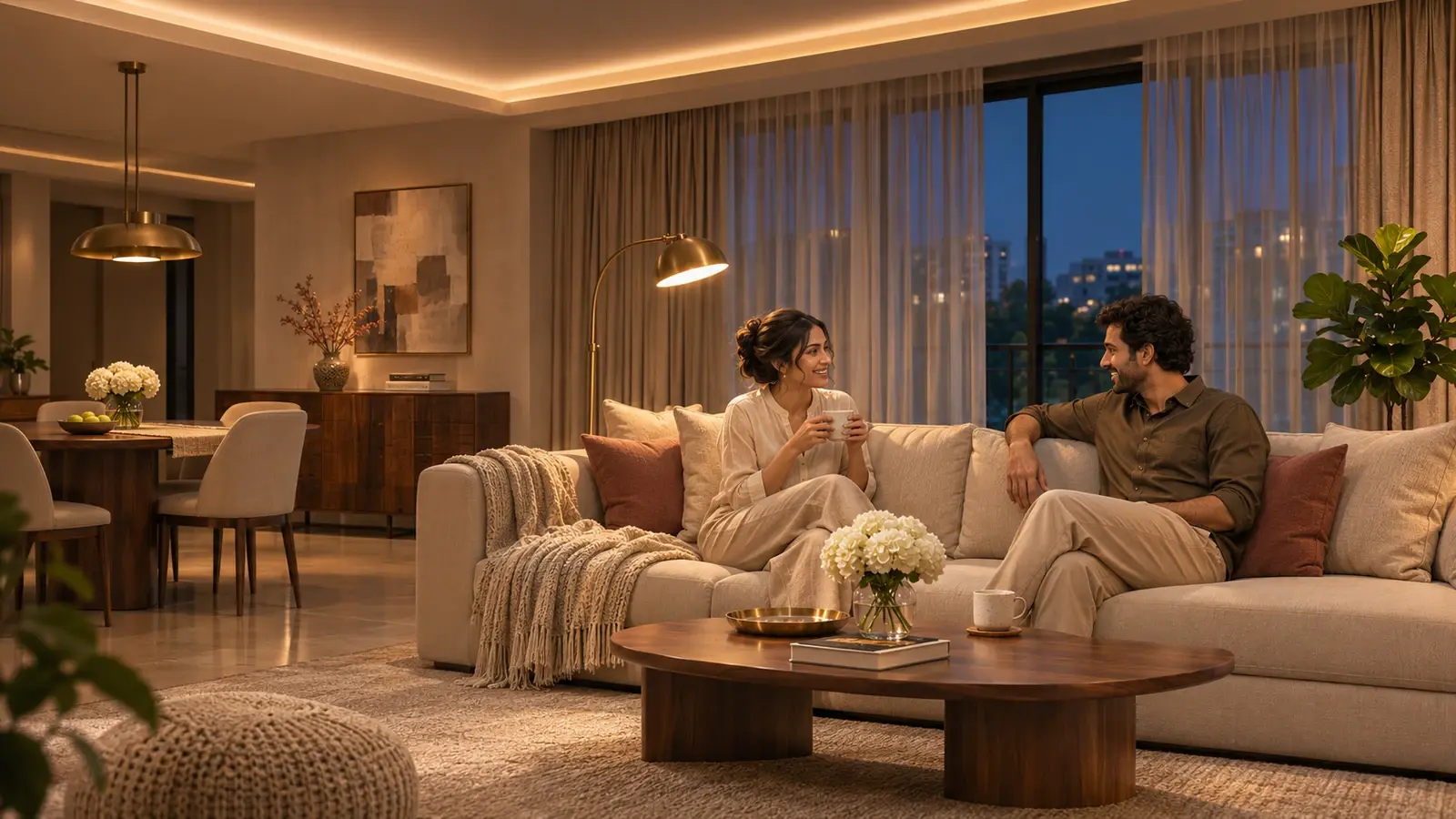
Return to that room at the end of the day.
The work is finished. The plates have been cleared. You are sitting with someone you care about, talking about something that has nothing to do with tomorrow’s calendar.
The light you want now may be very different from the light you needed a few hours earlier.
Plexilent’s daily lighting profile gives you a way to plan for those changes around your activities and preferences.
The starting point is already familiar: your room, your routine and the moments you want to enjoy in it.
Your Room. Your Routine. Let’s Get the Light Right.
Start with the room you use most.
Tell us how you use it, when the lighting feels wrong and what you want to change. Let’s explore a Plexilent setup built around your space and your day.
References
- CIE: Position Statement on Integrative Lighting, 3rd edition, 2024
- Brown et al.: Recommendations for daytime, evening and nighttime indoor light exposure, PLOS Biology, 2022
- Plexilent: Human-centric lighting and lighting-control capabilities
- IWBI: WELL Performance Verification Guidebook, Q2 2025
- DIN/TS 67600:2022-08: Complementary criteria for lighting design and non-visual effects
Frequently Asked Questions (FAQ) About Plexilent
Plexilent is an end-to-end smart automation platform combining proprietary multi-protocol IoT modules (PT825XX), 11 categories of smart hardware, mobile and smartwatch apps, and an enterprise building dashboard into one self-automating network.
No. Plexilent is designed for seamless retrofitting as well as new builds offering 10 Amp and 16 Amp Smart Plugs, wireless Bluetooth Mesh switches, universal AC controllers, and wireless sensors that upgrade existing appliances and spaces without major rewiring.
Through its PT825XX Smart Modules, Plexilent supports Wi-Fi, Bluetooth Mesh, Bluetooth Low Energy (BLE), Matter, RF433, and 2.4GHz under one roof.
You can explore the complete hardware catalog at plexilent.com, download the Plexilent App on the Google Play Store or Apple App Store, email our team at connect@plexilent.com, or visit our experience center at Lodha Business District, Kolshet Road, Thane West.
Experience Smarter Living with Plexilent
Take control of your connected space with the Plexilent app. Manage lighting, automate everyday routines, and enjoy seamless smart home control from anywhere.
Available on iOS and Android